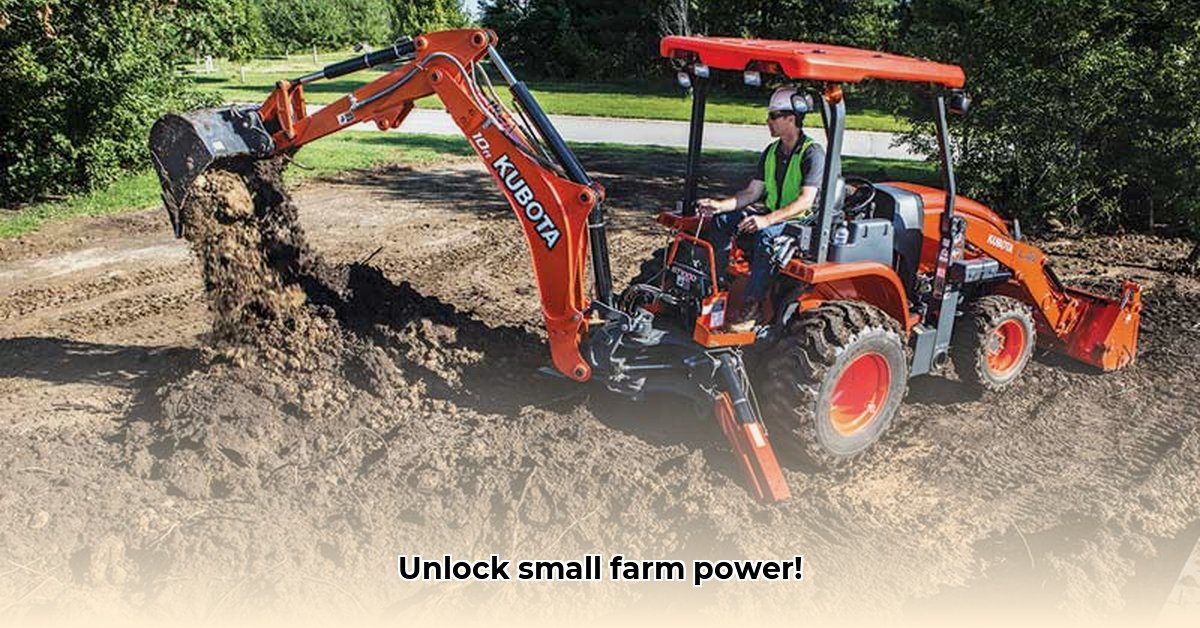
Running a small farm demands efficiency and sustainability. Investing in the right mini backhoe tractor can significantly improve your operations, but choosing the right one can feel overwhelming. This guide provides a comparative review of popular models and a step-by-step process to help you select the perfect tractor for your farm and budget. We'll cover everything from assessing your needs and understanding key specifications to calculating long-term costs and considering environmental impact. For more information on compact tractors, check out this helpful resource: compact tractor info.
Comparing Popular Mini Backhoe Tractor Models
Several excellent mini backhoe models are available. While they share core functionalities, differences in engine power, fuel efficiency, and price significantly impact your farm's operations. The table below compares key features of popular models:
| Model | Engine Power (HP) | Transmission Type | Fuel Efficiency (est. gph) | Typical Price Range (USD) | Key Features |
|---|---|---|---|---|---|
| John Deere 1025R | 25 | Hydrostatic | Variable | $25,000 - $35,000 | Smooth operation, renowned reliability |
| Kubota B26 TLB | 26 | Hydrostatic | Variable | $28,000 - $38,000 | Powerful, versatile, strong backhoe attachment |
| Yanmar SA221 | 22 | Hydrostatic | Variable | $22,000 - $32,000 | Compact, fuel-efficient, good for smaller farms |
| Other Brands/Models | Variable | Variable | Variable | Variable | Look for features that meet your specific needs |
Important Note: Fuel efficiency varies based on usage and terrain. Prices are estimates and can fluctuate. Obtain multiple quotes before committing to a purchase. Do you need a powerful engine for tough jobs, or will a less powerful model suffice? While hydrostatic transmissions are known for smooth operation, manual transmissions might be more cost-effective for experienced users.
A Step-by-Step Guide to Choosing Your Perfect Mini Backhoe
Buying a mini backhoe is a substantial investment. This structured approach simplifies the selection process:
Step 1: Assessing Your Farm's Needs
Before researching models, carefully assess your farm's requirements:
- Acreage: Larger farms often require more powerful tractors.
- Soil Type: Harder soil demands greater engine power.
- Typical Tasks: Identify primary uses (digging, moving materials, grading). This dictates horsepower and backhoe size needs.
- Budget: Determine your total budget, including purchase price, fuel, maintenance, and repairs. Are there any potential grants or subsidies to lower your costs? This is crucial for realistic financial planning.
Step 2: Understanding Key Specifications
Let's clarify some key specifications:
- Horsepower (HP): A measure of power; more HP handles heavier tasks, but it increases fuel consumption.
- Transmission Type: Hydrostatic (HST) transmissions (infinitely variable speed) offer smooth control, while manual transmissions are simpler and often cheaper but less versatile. Which better suits your experience and needs?
- Backhoe Capacity: This indicates the weight the backhoe can lift. Select a capacity sufficient for your digging needs—don't overbuy unless necessary.
- Fuel Efficiency (Gallons Per Hour or gph): Essential for long-term cost savings. Lower gph means lower fuel bills.
- Safety Features: Prioritize safety features like ROPS (Roll Over Protection Structures) and wet disc brakes.
Step 3: Calculating Long-Term Costs
The initial purchase price is only part of the cost:
- Fuel Consumption: Estimate annual fuel costs based on the tractor's fuel efficiency (gph) and expected usage.
- Maintenance: Schedule regular maintenance (oil changes, filter replacements) and factor those costs into your budget.
- Repairs: Account for unexpected repairs; selecting a reliable brand with readily available parts can mitigate this risk.
- Depreciation: Tractors depreciate over time. Factor this into your overall cost analysis.
Step 4: Exploring Financing Options
Several financing options exist:
- Leasing: A lower initial investment, suitable for short-term needs.
- Buying: Offers long-term control but requires a higher upfront investment.
- Grants and Subsidies: Explore government programs that support small farm equipment purchases.
- Loans: Banks and agricultural credit unions offer specialized farm equipment loans.
Step 5: Considering Environmental Impact
Sustainable practices begin with equipment selection:
- Fuel Efficiency: Choose fuel-efficient models to minimize your carbon footprint.
- Biofuels: Explore the feasibility of using biofuels.
- Responsible Disposal: Plan for responsible disposal or recycling at the end of the tractor's lifespan.
Step 6: Navigating Regulations
Comply with all local regulations:
- Emissions Standards: Ensure compliance with your region's emission standards.
- Safety Regulations: Adhere to all safety regulations.
Step 7: Making Your Decision
- Define Needs: Clearly define your current and future farming requirements.
- Research Models: Compare specifications (HP, fuel efficiency, features, price).
- Obtain Quotes: Get multiple quotes from different dealers.
- Calculate Total Cost: Include purchase price, fuel, maintenance, and repairs.
- Explore Financing: Investigate loan options, grants, subsidies, and leasing.
- Assess Environmental Impact: Compare fuel efficiency and emissions.
- Verify Compliance: Ensure the tractor meets local regulations.
- Make Your Choice: Select the model that best aligns with your needs and budget.
Remember to consult with experienced farmers or agricultural professionals for personalized guidance. This detailed approach ensures a well-informed decision for long-term farm success.